



Africa must professionalise infrastructure delivery – Project Management Institute





As governments in Africa accelerate infrastructure investment, including under the Programme for Infrastructure Development in Africa (PIDA), the region faces a 57% talent gap in construction project professionals by 2035, which is one of the highest rates globally, says construction professionals association the Project Management Institute (PMI).
Demand for construction project professionals across sub-Saharan Africa is projected to rise from about 260 000 in 2025 to more than 410 000 by 2035, which will leave a shortfall of nearly 150 000 professionals.
The challenge is part of a broader global trend, with PMI estimating that nearly 2.5-million additional construction project professionals will be needed worldwide by 2035 to meet growing infrastructure demand.
The research undertaken by PMI highlights a defining paradox in Africa’s growth story, namely that construction is one of the most powerful contributors to GDP expansion and job creation, but remains one of the most complex and waste-prone sectors of the economy.
PMI data shows that about 10% of global project investment is lost each year owing to poor performance. In a region deploying hundreds of billions of dollars into infrastructure, that inefficiency translates into billions in unrealised value.
“If we want infrastructure to be a true engine of GDP growth, we must professionalise the way we deliver it. Training must be viewed not as a cost, but as an investment in national competitiveness,” says PMI sub-Saharan Africa MD George Asamani.
Construction sits at the heart of the region’s development ambitions. Transport corridors, energy infrastructure, housing, healthcare and digital connectivity projects are the vehicles through which the region builds its future.
However, without the right project management capabilities, it risks delays, cost overruns, rework and, ultimately, lost value, he points out.
Specifically, PMI’s research identifies Africa as the region with the highest percentage growth in demand for construction project professionals globally. Countries such as Ethiopia are leading this surge, with projected yearly demand growth rates of 7.8%, which are among the highest worldwide.
Large-scale infrastructure investment is accelerating across sub-Saharan Africa, driven by demographic growth, urban expansion and regional trade integration, he says.
With more than $360-billion committed, PIDA represents a blueprint to unlock regional integration, industrialisation and long-term economic growth across Africa.
However, closing the construction talent gap will require a deliberate strategy to retain, develop and elevate project professionals over the long term.
Improving working conditions, investing consistently in professional development and creating structured career pathways for emerging and mid-career professionals are essential to building a resilient talent pipeline.
Construction projects are inherently complex, involving one of the largest stakeholder mixes of any industry, including governments, regulators, contractors, financiers, communities, environmental bodies and international partners, among others.
Misalignment among these groups can lead to inefficiencies, duplication and costly rework.
The PMI's research shows that inadequate communication and collaboration remain persistent challenges and often result in financial waste and subpar outcomes, says Asamani.
In an industry where design and scope changes are common, poor coordination between on-site and off-site teams can escalate into delays and budget overruns, he adds.
Specialised training and certifications help to equip professionals with the skills required to manage the growing complexity of modern infrastructure projects, alongside professional networks that enable practitioners to continuously strengthen their capabilities.
Further, employers report shortages in core project management competencies, such as scheduling, planning and resource optimisation, and essential skills, such as communication, collaborative leadership and stakeholder engagement.
Simultaneously, infrastructure financing is increasingly tied to environmental, social and governance standards, carbon management and responsible procurement, thereby creating demand for project leaders who can integrate sustainability into delivery.
“Construction is highly visible and deeply scrutinised. Every bridge, hospital or power plant carries public expectations. When projects go wrong, the impact is felt not just financially, but socially and politically.
“This is why professional project management is not a luxury. It is what safeguards value, protects public funds and ensures infrastructure delivers its intended impact,” says Asamani.
Meanwhile, construction has also historically lagged behind other industries in productivity and technology adoption.
The PMI’s research highlights digitalisation, including building information modelling, digital twins and AI, as critical levers to unlock efficiency, improve transparency and reduce rework and waste, he adds.
Article Enquiry
Email Article
Save Article
Feedback
To advertise email advertising@creamermedia.co.za or click here
Research Reports

Projects


Latest Multimedia


Latest News
Showroom
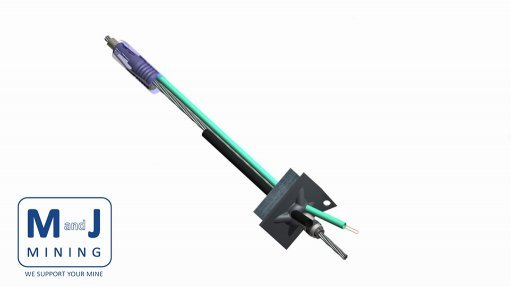
M and J Mining are leading suppliers of physical support systems as used by the underground mining industry. Our selection of products are not...
VISIT SHOWROOM




Announcements
What's On
Subscribe to improve your user experience...
Option 1 (equivalent of R125 a month):
Receive a weekly copy of Creamer Media's Engineering News & Mining Weekly magazine
(print copy for those in South Africa and e-magazine for those outside of South Africa)
Receive daily email newsletters
Access to full search results
Access archive of magazine back copies
Access to Projects in Progress
Access to ONE Research Report of your choice in PDF format
Option 2 (equivalent of R375 a month):
All benefits from Option 1
PLUS
Access to Creamer Media's Research Channel Africa for ALL Research Reports, in PDF format, on various industrial and mining sectors
including Electricity; Water; Energy Transition; Hydrogen; Roads, Rail and Ports; Coal; Gold; Platinum; Battery Metals; etc.
Already a subscriber?
Forgotten your password?
Receive weekly copy of Creamer Media's Engineering News & Mining Weekly magazine (print copy for those in South Africa and e-magazine for those outside of South Africa)
➕
Recieve daily email newsletters
➕
Access to full search results
➕
Access archive of magazine back copies
➕
Access to Projects in Progress
➕
Access to ONE Research Report of your choice in PDF format
RESEARCH CHANNEL AFRICA
R4500 (equivalent of R375 a month)
SUBSCRIBEAll benefits from Option 1
➕
Access to Creamer Media's Research Channel Africa for ALL Research Reports on various industrial and mining sectors, in PDF format, including on:
Electricity
➕
Water
➕
Energy Transition
➕
Hydrogen
➕
Roads, Rail and Ports
➕
Coal
➕
Gold
➕
Platinum
➕
Battery Metals
➕
etc.
Receive all benefits from Option 1 or Option 2 delivered to numerous people at your company
➕
Multiple User names and Passwords for simultaneous log-ins
➕
Intranet integration access to all in your organisation
